
Doomsday Method: what day was it? Learn to know instantly.
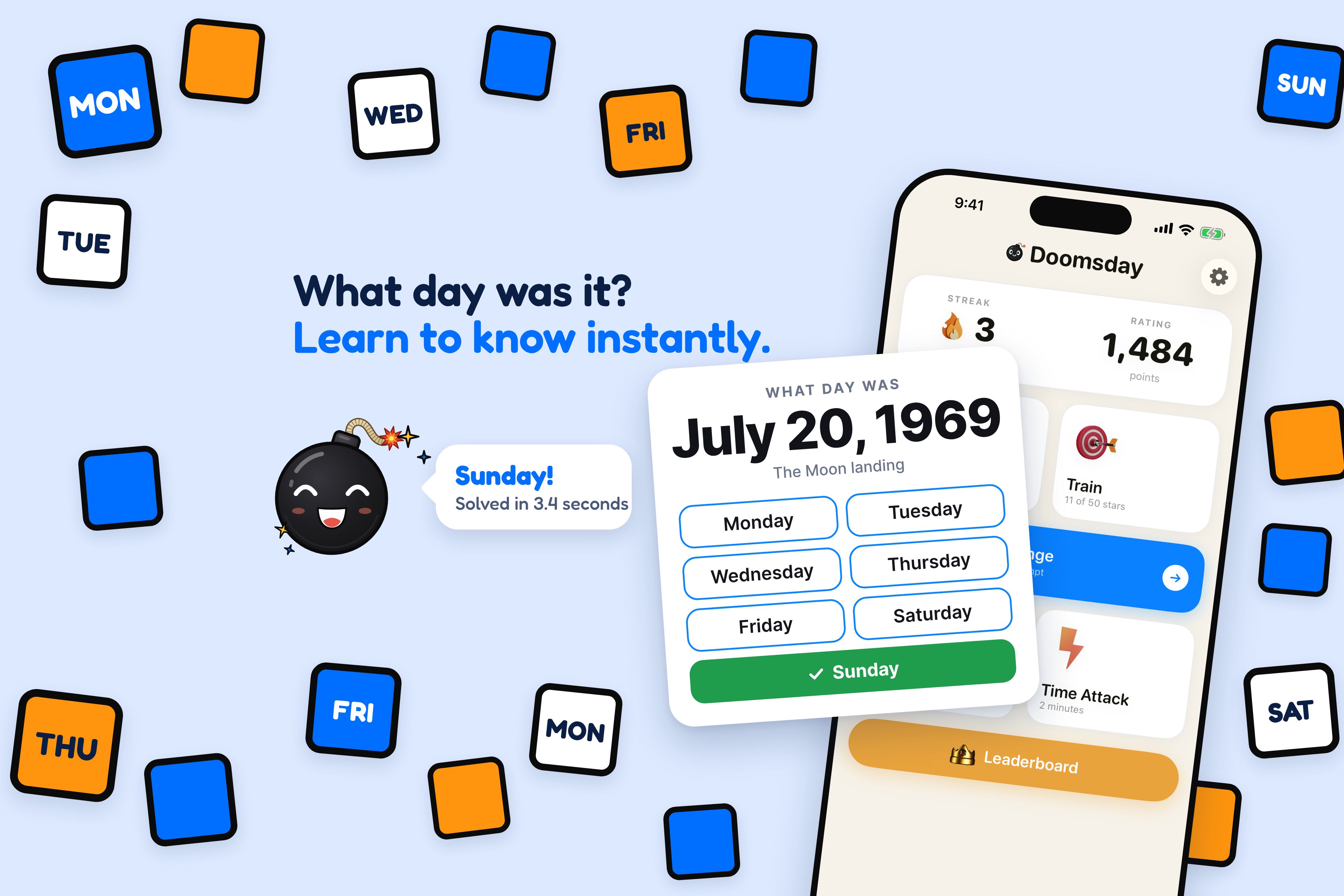
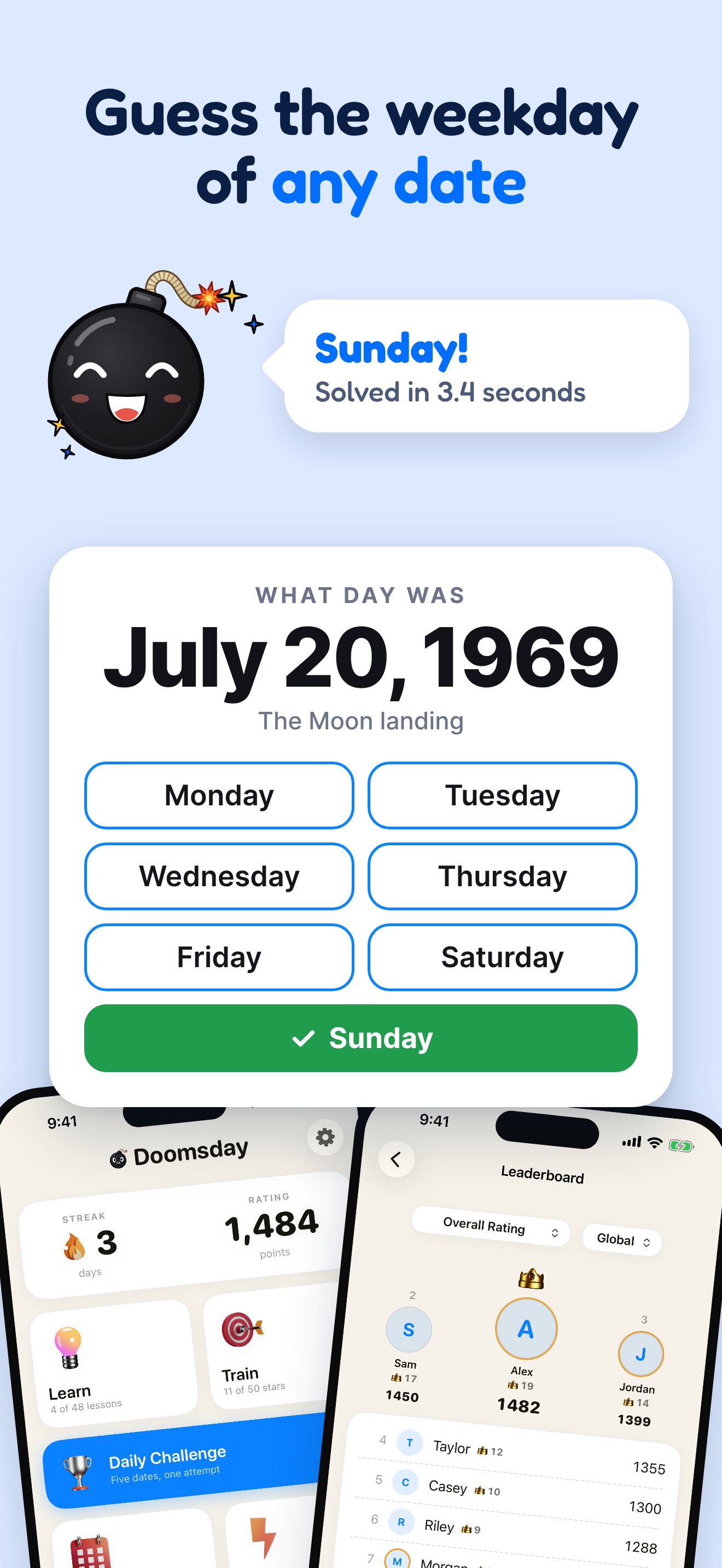
Someone names a date, you name its weekday in seconds, with no calendar.
The trick that makes it possible
Every year, 4/4, 6/6, 8/8, 10/10 and 12/12 share one weekday: the year's doomsday. Learn one weekday, and you have the whole year.
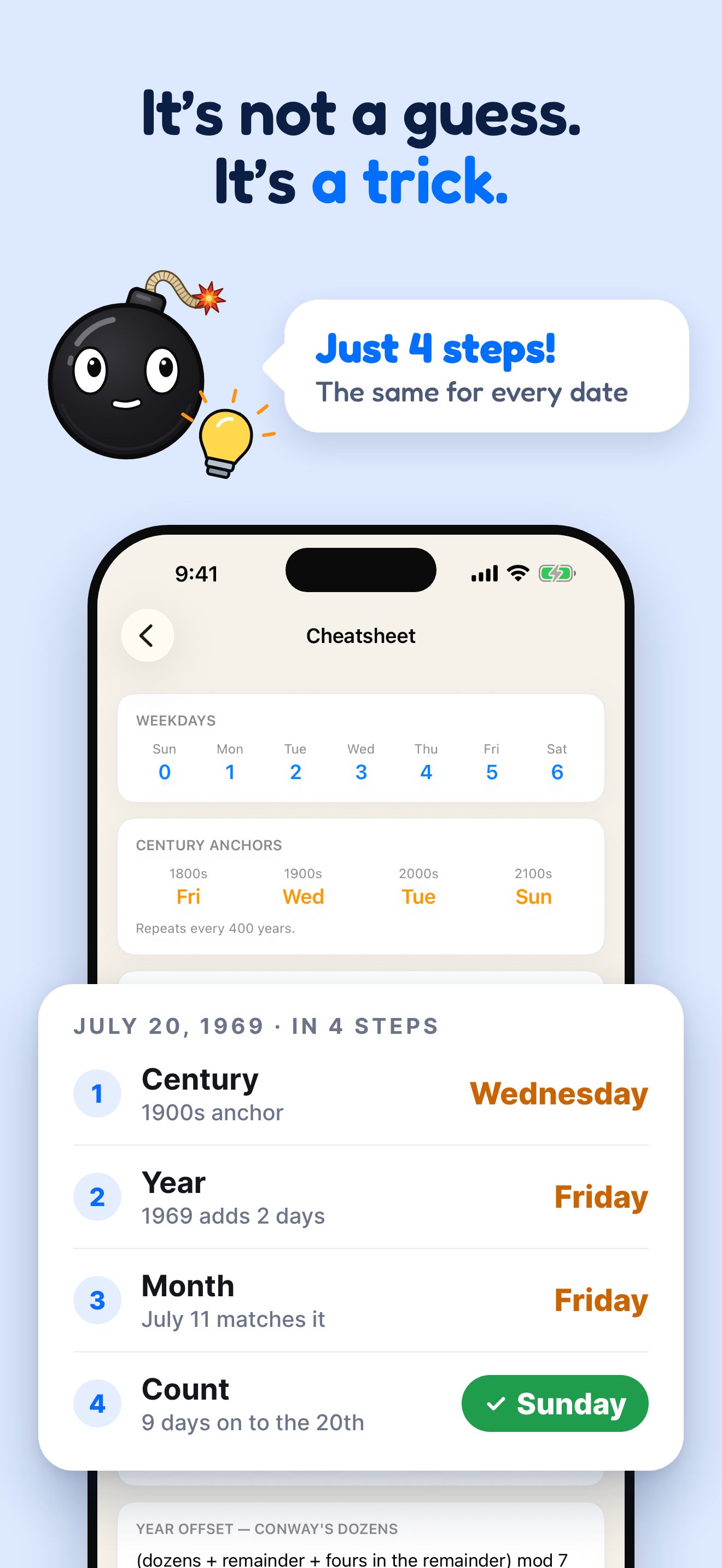
The Doomsday algorithm in four steps
Steps 1 and 2 give you the year's doomsday. Steps 3 and 4 turn it into the answer. For a date this year, start at step 3.
-
Century anchor
One weekday per century. The pattern repeats every 400 years.
-
Year offset
A number from 0 to 6, from the last two digits of the year.
-
Month doomsday
One easy date in every month that always falls on the doomsday.
-
Count
Jump to your date in sevens, then add or take away a few days.
Frequently asked
Anything else? Get in touch.
Who invented the Doomsday method?
John Horton Conway, in 1973. He built on a method Lewis Carroll published in 1887.
How long does it take to learn?
Dates in the current year take about an afternoon. For the 1900s and 2000s, give it a couple of weeks of short daily practice.
Do I need a good memory?
No. It comes down to about a dozen facts and some simple adding and subtracting.
Does it work for any year?
Yes, for the Gregorian calendar. Dates before a country switched calendars, like Britain before 1752, need a Julian adjustment. The app teaches it.
Is the app free?
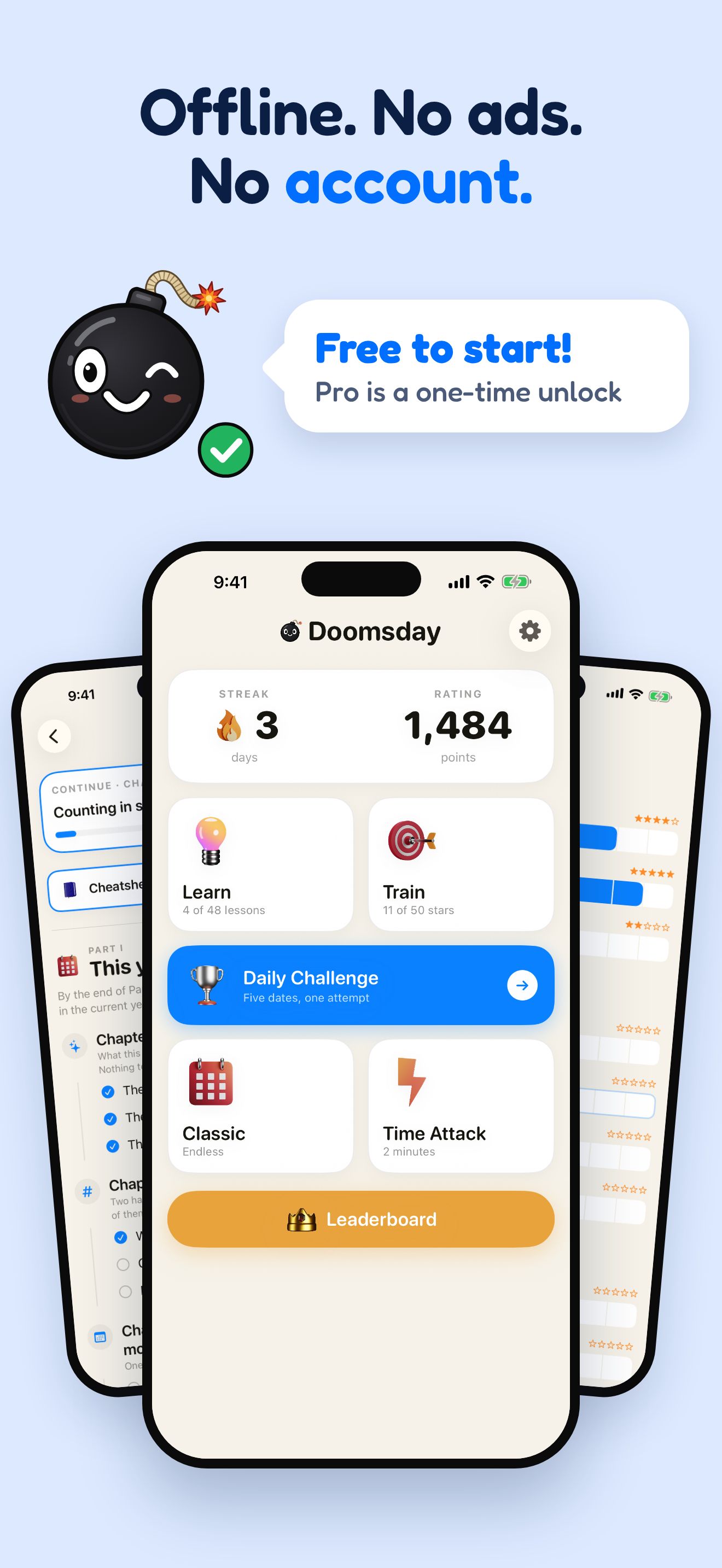
You can start for free, with the first 16 lessons. A one-time Pro purchase unlocks everything. There is no subscription.

Give it an afternoon.
The first 16 lessons are free.
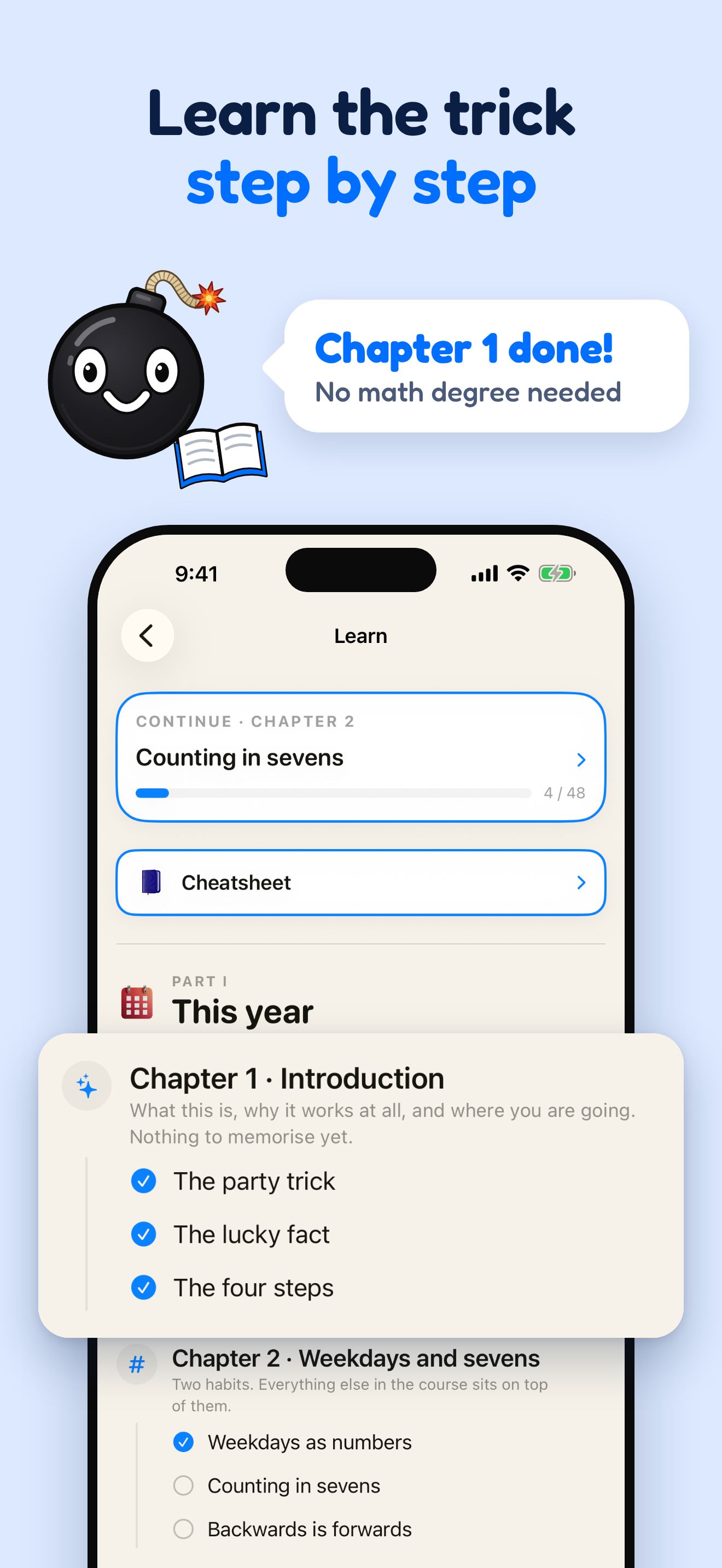
Learn
48 lessons in 11 chapters. Each one ends with a question.
Train
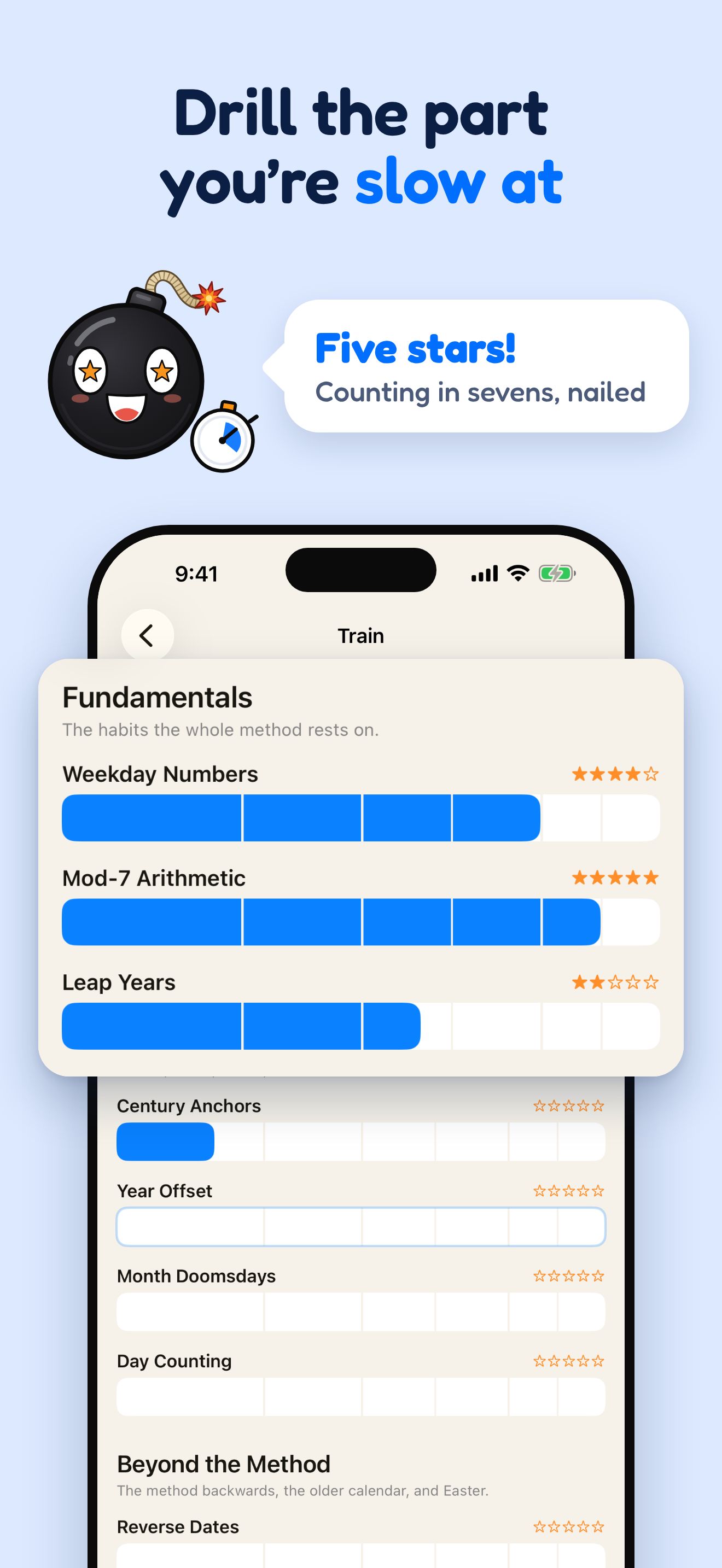
Ten drills, one for every step, plus Julian dates and Easter.
Play
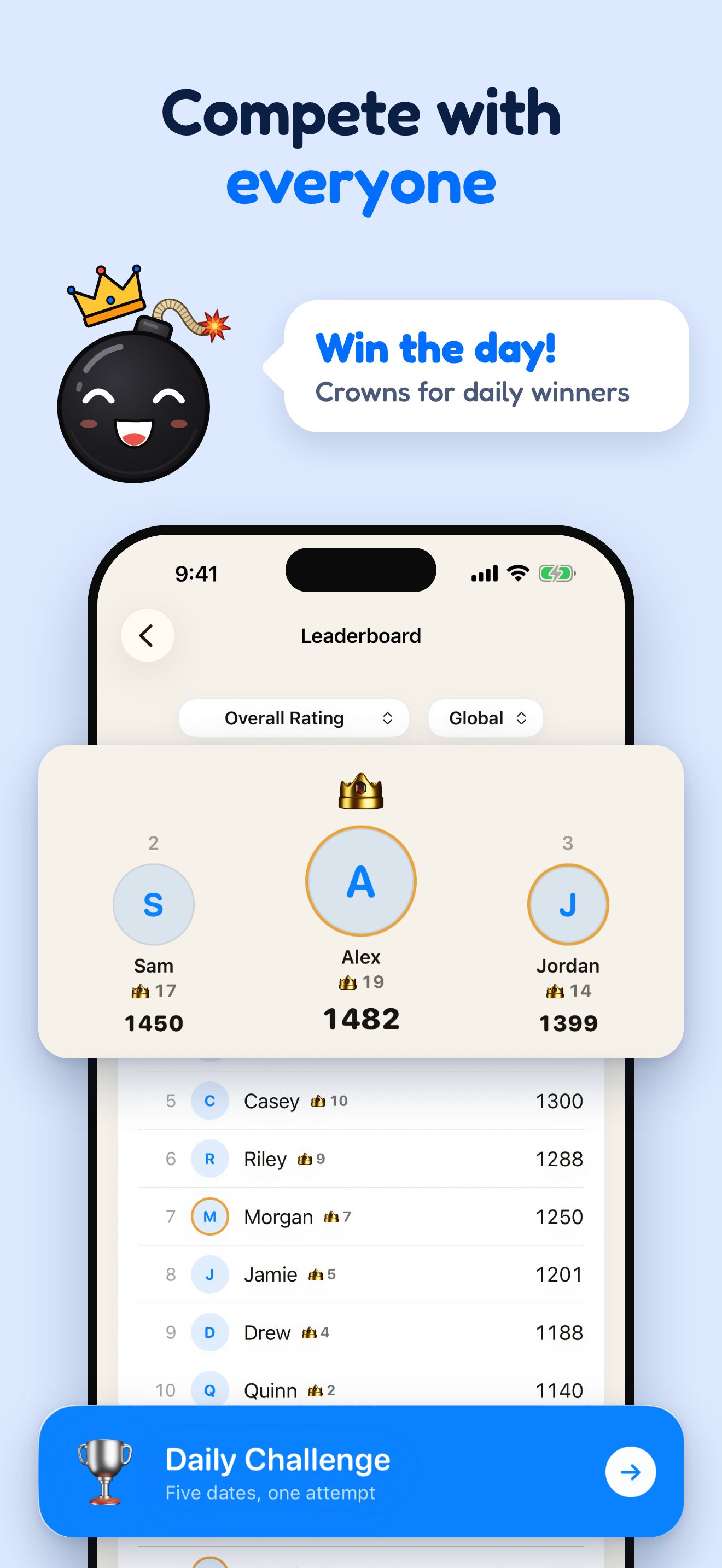
Classic, a Daily Challenge and Time Attack, with Game Center leaderboards.
No account, no ads. Analytics only if you say yes. Pro is a one-time unlock.

Apple, the Apple logo and iPhone are trademarks of Apple Inc.